• Skip to primary navigation
  • Skip to main content

Recent Posts

  • Releasing the Day Before Bed: Sleep and Mental Health
  • Releasing the Pressure to Be Perfect: Mental Health and Women
  • Releasing Emotional Pain: Healthier Ways to Cope When Life Feels Overwhelming
  • Releasing the Past: The Mental Health Power of Forgiveness
  • Releasing the Need to Control Everything: Managing Anxiety in an Uncertain World
Prestige Header logo

Prestige Health and Wellness, Tampa

Where Your Health Matters

  • Home
  • About Us
  • Services
    • Psychiatry
    • Spravato Treatment
    • Qbtech ADHD testing
    • Medical Weight Loss
  • Patient Portal
  • Resources
    • Blogs
  • Contact Us

Dr. Louis

The Mind–Heart Connection: How Emotional Health Affects Physical Health

February 9, 2026 by Dr. Louis

Mental health and physical health are deeply connected. Chronic stress, anxiety, depression, and trauma affect not only emotional well-being but also cardiovascular functioning (American Heart Association [AHA], 2022). When emotional health is neglected, the body often carries the burden.

How Mental Health Impacts Physical Health

• Increased cortisol and stress hormones
• Elevated blood pressure
• Chronic inflammation
• Sleep disruption
• Changes in appetite and energy

Over time, these physiological effects increase the risk for cardiovascular disease, metabolic disorders, and weakened immune function.

Depression and Heart Health

Individuals with untreated depression are at higher risk for developing heart disease and engaging in poor health behaviors such as physical inactivity and inconsistent medical care (Whooley et al., 2008).

Anxiety and the Nervous System

Chronic anxiety keeps the body in a prolonged fight-or-flight state, placing ongoing strain on the heart, blood vessels, and nervous system. Over time, this constant activation can contribute to hypertension, palpitations, and burnout.
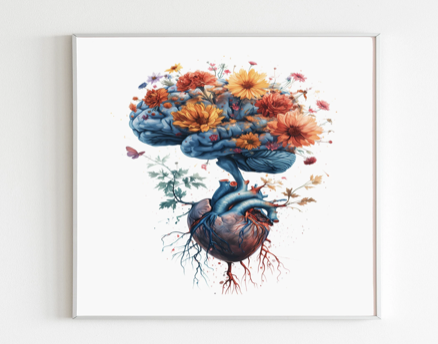
Whole-Person Healing

At Prestige Health & Wellness, we approach care holistically—addressing emotional, psychological, and biological factors that influence overall health.

Treatment may include:
• Psychiatric evaluation
• Medication management
• Therapy referrals
• Lifestyle and wellness guidance

Small Steps That Support Both Mind and Heart

• Establishing a consistent sleep routine
• Gentle physical activity such as walking or stretching
• Mindfulness, meditation, or prayer
• Limiting caffeine and alcohol
• Seeking professional mental health support

You Deserve Whole-Person Care

Your mental health is healthcare.

Schedule an appointment: https://www.yourprestigehealth.com

References

American Heart Association. (2022). Stress and heart health. https://www.heart.org

Whooley, M. A., et al. (2008). Depression and cardiovascular disease. Journal of the American Medical Association, 300(20), 2379–2388.


Filed Under: Mental Health Tagged With: health, mental health, therapy

Breaking the Silence: Mental Health in the Black Community

February 9, 2026 by Dr. Louis

Mental health is an essential part of overall wellness. Yet in many Black communities, conversations about mental health have historically been shaped by stigma, cultural expectations, and limited access to culturally responsive care (American Psychiatric Association [APA], 2023; Substance Abuse and Mental Health Services Administration [SAMHSA], 2022). During Black History Month, we honor not only the resilience of Black individuals and families, but also the importance of creating space for healing, vulnerability, and support.

For generations, many individuals were taught to “be strong,” “pray it away,” or handle emotional pain privately. While faith, strength, and perseverance are powerful protective factors, they should never replace professional mental health care when it is needed. Prayer, strength, and seeking help can coexist.

Common Mental Health Concerns in the Black Community

• Depression and persistent sadness
• Anxiety and chronic stress
• Trauma and post-traumatic stress
• Burnout and emotional exhaustion
• Grief and unresolved loss

Because these experiences are often normalized or minimized, many individuals suffer in silence, which can delay diagnosis and treatment.

Barriers to Care

• Cultural stigma around mental illness
• Mistrust of the healthcare system
• Limited access to culturally competent providers
• Financial and insurance barriers

Systemic racism and chronic stress further contribute to increased mental and physical health burden (Williams & Mohammed, 2013).

Why Culturally Responsive Care Matters

Culturally responsive mental health care acknowledges lived experiences, cultural identity, faith, family dynamics, and systemic stressors. When patients feel seen, heard, and understood, engagement and outcomes improve.

At Prestige Health & Wellness, we believe healing begins with being heard. Our clinicians provide compassionate, nonjudgmental, and personalized psychiatric care rooted in dignity and respect.

You Deserve Support

Mental health care is not a weakness. It is healthcare.

Schedule an appointment: https://www.yourprestigehealth.com

References

American Psychiatric Association. (2023). Mental health disparities: African Americans. https://www.psychiatry.org

Substance Abuse and Mental Health Services Administration. (2022). Addressing behavioral health disparities in Black communities. https://www.samhsa.gov

Williams, D. R., & Mohammed, S. A. (2013). Racism and health I: Pathways and scientific evidence. American Behavioral Scientist, 57(8), 1152–1173.

Filed Under: Mental Health Tagged With: mental health, Psychotherapy, self-esteem

 Breaking the Cycle of Anxiety: How to Reduce Anxiety and Regain Control in the New Year

January 18, 2026 by Dr. Louis

Anxiety often increases at the start of a new year. Expectations rise. Schedules tighten. The nervous system stays on high alert.

But anxiety is not a flaw.

Anxiety is a signal — and signals can be understood, regulated, and treated.

Evidence-based anxiety treatment focuses on nervous system regulation, thought patterns, and supportive care — not willpower or avoidance (NIMH, 2023).

Why Anxiety Increases in January

January anxiety is common and often triggered by:

  • Pressure to meet goals
  • Disrupted routines
  • Financial stress
  • Fatigue from the holidays
  • Fear of “failing” the new year

Understanding this normalizes symptoms and reduces shame — which is essential for anxiety treatment.

Anxious Thoughts Are Predictions, Not Facts

Common anxiety thoughts include:

  • “Something bad will happen.”
  • “I can’t handle this.”
  • “I’m messing everything up.”

Neuroscience shows anxiety is driven by perceived threat, not actual danger (LeDoux & Pine, 2016).

Ask yourself:

Is this fear factual — or just loud?

This question alone can reduce anxiety’s intensity.

Your Nervous System Needs Safety, Not Perfection

Anxiety improves when the nervous system feels regulated.

Support your nervous system with:

  • Consistent sleep
  • Balanced nutrition
  • Structured routines
  • Mindfulness and grounding exercises
  • Reduced overstimulation

Research confirms nervous system regulation significantly reduces anxiety symptoms (Porges, 2011).

What Happens When You Stop Fighting Anxiety

Avoidance and resistance amplify anxiety.

Listening to anxiety reveals unmet needs such as:

  • Boundaries
  • Rest
  • Support
  • Emotional processing

Acceptance-based therapies reduce anxiety more effectively than suppression (Hayes et al., 2016).

Therapy and Medication Are Evidence-Based Anxiety Treatments

Cognitive Behavioral Therapy and medication are proven treatments for:

  • Generalized anxiety disorder
  • Panic disorder
  • Social anxiety
  • Performance anxiety

Medication helps regulate brain chemistry, while therapy rewires thought patterns. Combined treatment often yields the strongest outcomes (NIMH, 2023).

Create an Anxiety-Relief Plan for 2026

A simple structure:

  • One thing to stop: overcommitting
  • One thing to start: grounding before bed
  • One thing to continue: consistent medication
  • One thing to ask for: professional support

Predictable plans reduce anxiety by restoring control and clarity (APA, 2023).

You Can Regain Control Over Anxiety

The goal is not to eliminate anxiety — it’s to reduce its power.

With the right support, education, and tools, anxiety becomes manageable instead of overwhelming.

At Prestige Health & Wellness, we provide compassionate, comprehensive evidence-based anxiety treatment for adolescents and adults.

References

American Psychological Association (APA). (2023).
Understanding anxiety and stress-related disorders.
https://www.apa.org/topics/anxiety

Hayes, S. C., Strosahl, K. D., & Wilson, K. G. (2016).
Acceptance and commitment therapy: The process and practice of mindful change (2nd ed.). New York, NY: Guilford Press.

LeDoux, J. E., & Pine, D. S. (2016).
Using neuroscience to help understand fear and anxiety. American Journal of Psychiatry, 173(11), 1083–1093.
https://doi.org/10.1176/appi.ajp.2016.16030353

National Institute of Mental Health (NIMH). (2023).
Anxiety disorders.
https://www.nimh.nih.gov/health/topics/anxiety-disorders

Porges, S. W. (2011).
The polyvagal theory: Neurophysiological foundations of emotions, attachment, communication, and self-regulation. New York, NY: Norton.

Filed Under: Anxiety Tagged With: Anxiety

New Year, Real You: A Sustainable Mental Health Reset That Lasts

January 11, 2026 by Dr. Louis

January often brings pressure to reinvent yourself overnight. New habits. New goals. A “better” version of you.

At Prestige Health & Wellness, we believe mental health in the new year should look different.

January mental health resets are not about becoming someone else — they’re about returning to yourself.

Research consistently shows that sustainable mental health improvement is rooted in self-compassion, consistency, and support — not perfection or comparison (Neff, 2011; APA, 2023).

Why a Mental Health Reset Works Best in January

January creates a natural pause. The calendar resets, routines shift, and reflection becomes easier. When approached mindfully, this makes January an ideal time to:

  • Reevaluate emotional health
  • Reset daily habits
  • Begin therapy or medication support
  • Create sustainable mental health goals

Unlike extreme resolutions, mental health goals focused on awareness and regulation last longer.

pastedGraphic_2.png

Start With Self-Awareness, Not Self-Criticism

Mental health improvement begins with awareness.

Take a few quiet moments and ask:

  • Where am I emotionally right now?
  • What feels heavy?
  • What support do I need?

Mindfulness and emotional awareness reduce stress reactivity and improve emotional regulation (Kabat-Zinn, 2015).

Awareness creates choice — and choice creates healing.

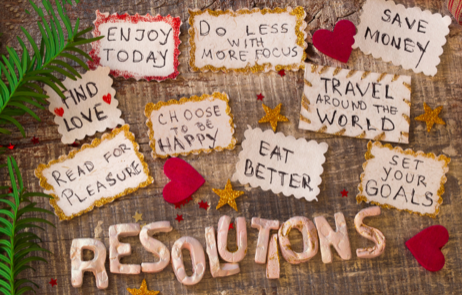
Set Mental Health Intentions Instead of Resolutions

Traditional resolutions rely on external pressure:

  • “I need to stop…”
  • “I should do better…”

Intentions support intrinsic motivation:

  • “I’m choosing rest.”
  • “I’m prioritizing my mental wellbeing.”
  • “I’m choosing support.”

Intentions align with long-term behavior change and emotional resilience (Ryan & Deci, 2020).

One Daily Mental Health Habit Is Enough

Consistency — not intensity — drives real change.

Effective daily mental health habits include:

  • A 10-minute walk
  • Taking medications consistently
  • Practicing slow breathing
  • Hydrating first thing in the morning
  • Brief journaling

Habits formed gradually are more likely to stick and improve mental health outcomes (Lally et al., 2010).

Healing Happens at Your Own Pace

Mental health is not a race.

Every intentional choice you make — no matter how small — improves emotional regulation and resilience over time. Your pace is not a weakness. It’s wisdom.

When to Seek Professional Mental Health Support

Mental health support may include:

  • Therapy
  • Medication management
  • Psychiatric evaluation
  • Lifestyle and stress-management guidance

Seeking help early reduces symptom severity and improves quality of life (WHO, 2022).

Support is strength — not failure.

pastedGraphic_7.png

A Real Mental Health Reset for the New Year

This January, choose the real you.
Not the exhausted version.
Not the perfection-chasing version.
The supported, healing version.

At Prestige Health & Wellness, we specialize in Humanizing mental health care rooted in compassion and evidence-based treatment.

References

American Psychological Association (APA). (2023).
Stress, behavior change, and mental health.
https://www.apa.org/topics/stress

Kabat-Zinn, J. (2015).
Mindfulness for beginners: Reclaiming the present moment—and your life. Boulder, CO: Sounds True.

Lally, P., van Jaarsveld, C. H. M., Potts, H. W. W., & Wardle, J. (2010).
How are habits formed: Modeling habit formation in the real world. European Journal of Social Psychology, 40(6), 998–1009.
https://doi.org/10.1002/ejsp.674

Neff, K. D. (2011).
Self-compassion, self-esteem, and well-being. Social and Personality Psychology Compass, 5(1), 1–12.
https://doi.org/10.1111/j.1751-9004.2010.00330.x

Ryan, R. M., & Deci, E. L. (2020).
Intrinsic and extrinsic motivation: The psychology of human motivation. New York, NY: Guilford Press.

World Health Organization (WHO). (2022).
Guidelines on mental health promotion and prevention.
https://www.who.int/teams/mental-health-and-substance-use

Filed Under: Mental Health

Mindful Eating for the Holidays: Nourish Body and Mind in November

November 25, 2025 by Dr. Louis

Prestige Health & Wellness — Bringing Humanity Back to Mental Health

November invites us to pause, breathe, and reflect. As the year begins to wind down and the holiday season picks up, many of us find ourselves juggling stress, expectations, and emotional fatigue. Yet woven into this season is a powerful tool for emotional healing and resilience: gratitude.

Gratitude isn’t just a feel-good practice—it’s a science-backed strategy proven to strengthen mental health, enhance relationships, and shift the way we experience life.

Why Gratitude Matters for Mental Health

Research consistently shows that practicing gratitude can reduce symptoms of depression and anxiety, improve sleep, and increase overall well-being (Emmons & McCullough, 2003).

That’s because gratitude helps the brain:

✨ Refocus on the positive
✨ Reduce rumination and negative thought loops
✨ Strengthen emotional resilience
✨ Boost serotonin and dopamine—the “feel good” chemicals

Simply put: gratitude changes what your brain pays attention to.
And when practiced consistently, it changes how you show up in your life.

How Gratitude Helps You Grow

Gratitude is more than a moment—it’s a mindset.

When you intentionally look for what’s going well, you begin to:

  • Build emotional strength during difficult seasons
  • Strengthen relationships by appreciating others
  • Enhance confidence through increased self-awareness
  • Create mental clarity and shift out of survival mode
  • Improve physical health with better sleep and reduced stress

Gratitude doesn’t remove life’s challenges, but it gives you the emotional capacity to navigate them with a clearer, calmer mind.

Simple Ways to Practice Gratitude This November

Gratitude doesn’t require perfection—just presence. Here are practical, manageable ways to bring it into your daily routine:

1. The 3-Item Evening Reflection

Before bed, list three things you’re grateful for.
They can be big (“my family”) or tiny (“a quiet morning”).
This trains your brain to end each day on a positive note.

2. Thank-You Notes (Even Short Ones)

A text, a sticky note, or a quick email can go a long way.
Expressing gratitude out loud strengthens connection—and connection strengthens mental health.

3. Gratitude Journal

Spend 3–5 minutes each morning or night writing what you appreciate.
This simple routine helps you stay grounded even when days feel heavy.

4. Savor the Good Moments

When something feels joyful—warm coffee, a hug, a laugh—pause for 10 seconds and let your body feel it.
This “micro-savoring” is one of the fastest ways to boost mood.

5. Practice Gratitude Toward Yourself

Many people have no problem appreciating others but struggle to appreciate themselves.
Start with one sentence:
“I am proud of myself today for…”

Self-gratitude promotes confidence, emotional regulation, and inner peace.

A Gentle Reminder

Gratitude is not about ignoring pain or pretending everything is perfect.
It’s about creating space for joy even in the midst of challenges.
It allows you to grow, heal, and reconnect with the goodness around you—and within you.

At Prestige Health & Wellness, we believe gratitude is one of the most powerful tools for holistic mental wellness, helping you nurture your mind, body, and spirit during the holiday season and beyond.

Quick Gratitude Tip for Today

Tonight, write down three things you’re thankful for—no matter how small.
Let this simple act be your first step into a November filled with growth, reflection, and renewal.

Reference

Emmons, R. A., & McCullough, M. E. (2003). Counting blessings versus burdens: An experimental investigation of gratitude and subjective well-being in daily life. Journal of Personality and Social Psychology, 84(2), 377–389.

Filed Under: Blog

Gratitude & Growth: How Thankfulness Boosts Mental Health

November 24, 2025 by Dr. Louis

 Mindful Eating for the Holidays: Nourish Body and Mind in November

Prestige Health & Wellness — Bringing Humanity Back to Mental Health

The holiday season is here—a time of family, gratitude, and yes… lots of food. From office potlucks to Thanksgiving feasts, November often marks the beginning of “food season,” when many people find themselves eating on autopilot, emotionally overwhelmed, or struggling with guilt after indulging.

At Prestige Health & Wellness, we believe the holidays should be enjoyed—not feared. Mindful eating can help you stay grounded, avoid emotional spirals, and build a healthier relationship with food and your body during this busy time of year.

What Is Mindful Eating—Really?

Mindful eating isn’t about dieting, restriction, or forcing yourself to avoid your favorite dish.
It’s about slowing down enough to:

✨ Notice how your body feels
✨ Enjoy food without guilt
✨ Pause before reacting to cravings
✨ Reduce emotional or stress-driven eating
✨ Feel satisfied—not stuffed

In simple terms: mindful eating helps you reconnect to your body so you can make eating decisions from a place of calm, not chaos.

Why the Holidays Trigger Overeating

November brings unique challenges:

  • Stress (family, finances, travel, deadlines)
  • Abundance of rich foods
  • Emotional eating triggered by memories or loneliness
  • Social pressures to “eat more,” “try this,” or “have another plate”
  • Disrupted routines (sleep, schedules, exercise)

Eating becomes automatic. Before you know it, you’re three plates in, feeling disconnected and guilty.

Mindful eating creates space between the urge and the action.

The Science Behind Mindful Eating

Research shows that mindfulness-based eating interventions can reduce binge-eating tendencies, improve digestion, enhance satisfaction, and even lower fasting glucose levels in people struggling with emotional eating (Mason et al., 2016).

Simply put: being present helps you make choices that nourish—not punish—your body.

Practical Mindful Eating Tips for November

These strategies are simple and realistic—no rules, no restrictions, just awareness.

1. Start Each Meal With the “3-Breath Reset”

Before lifting your fork, pause.
Take three deep breaths and ask:

  • Am I truly hungry?
  • What does my body need right now?
  • What am I feeling emotionally?

This 10-second grounding can completely shift your approach to the meal.

2. Build a Balanced Plate (Not a Perfect One)

Instead of labeling foods as “good” or “bad,” aim for:

  • A source of protein
  • A fruit or vegetable
  • A carbohydrate you enjoy
  • A small indulgence you truly want

Enjoying your favorite foods—mindfully—helps you avoid overindulging later.

3. Slow Down With the 20-Second Rule

Put your fork down between bites.
This simple pause:

  • Helps your brain register fullness
  • Enhances flavor
  • Prevents overeating

Most overeating happens because we eat too fast for our body to catch up.

4. Practice Mindful Savoring

Choose one food on your plate and fully savor it:
Its texture, warmth, flavor, aroma.

When you fully enjoy food, you need less of it to feel satisfied.

5. Create an Emotional Check-In

Before grabbing another serving, ask:
“Is this hunger—or is this emotion?”

Sometimes we reach for food because we’re stressed, bored, lonely, or overwhelmed.
Awareness helps you choose a healthier coping strategy—or mindfully enjoy that treat without guilt.

6. Give Yourself Permission to Enjoy

Restriction breeds rebellion.
Mindful eating is not about depriving yourself during the holidays.
It’s about staying connected to your body while enjoying seasonal favorites.

A Gentle Reminder: Your Body Deserves Compassion

This season is about gratitude—not perfection.
Food is a beautiful part of celebration and culture.
Mindful eating simply helps you appreciate it while honoring your body’s needs.

At Prestige Health & Wellness, we believe in holistic care that supports both mental and physical well-being. Mindful eating is one of the ways you can stay grounded, present, and emotionally healthy throughout the holiday season.

Mindful Moment for November

Try this today:
Before your next meal, pause for 10 seconds, take three deep breaths, and notice how your body feels.
A small moment of awareness can transform the way you nourish yourself.

Reference

Mason, A. E., Epel, E. S., Kristeller, J., Moran, P. J., Dallman, M., Lustig, R. H., … & Daubenmier, J. (2016). Effects of a mindfulness-based intervention on mindful eating, sweets consumption, and fasting glucose levels in obese adults: data from the SHINE randomized controlled trial. Journal of Behavioral Medicine, 39(2), 201–213.

Filed Under: Blog

  • « Go to Previous Page
  • Page 1
  • Page 2