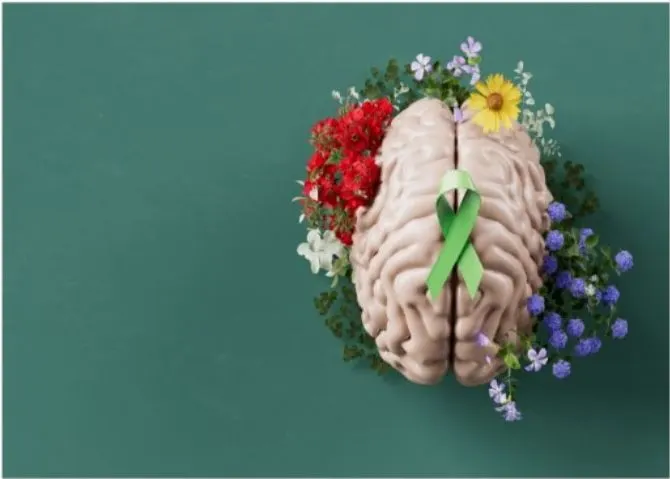

June is Men's Mental Health Month, with Men's Health Week observed June 8–14 and Father's Day falling on the third Sunday of the month. It's a month that asks one of the most important — and most overdue — questions in mental health care:
Why are so many men still suffering in silence?
The Numbers Tell a Sobering Story
Men's mental health is in the middle of a quiet crisis. According to the U.S. Centers for Disease Control and Prevention, men die by suicide at nearly four times the rate of women, and account for nearly 80% of all suicide deaths in the United States despite making up only 50% of the population (CDC, 2024). In 2023 alone, suicide claimed the lives of more than 49,000 Americans — the overwhelming majority of them men (NIMH, 2024).
And yet, men are consistently less likely than women to seek mental health support, talk openly about emotional struggles, or stay in treatment long enough to benefit from it (Addis & Mahalik, 2003).
The silence isn't because nothing is wrong. The silence is the wound.
Why Men Suffer in Silence
Foundational research by psychologists Michael Addis and James Mahalik (2003) identified the cultural roots of this pattern. Traditional masculine norms — self-reliance, emotional restriction, toughness, and the conflation of vulnerability with weakness — actively interfere with help-seeking. For many men, asking for help isn't just a practical decision. It feels like a violation of identity.
Most men have heard some version of these messages so many times that they no longer hear them as instructions. They hear them as who they're supposed to be:
- "Be strong."
- "Suck it up."
- "Don't be soft."
- "Real men don't talk about feelings."
- "You're the man of the house — you can't fall apart."
These messages don't just delay treatment. They can end lives.
Depression in Men Often Doesn't Look Like Depression
One of the reasons men's mental health struggles go unrecognized — even by the men experiencing them — is that they often don't show up the way popular culture says they should. Instead of obvious sadness or tears, depression and anxiety in men frequently look like:
- Irritability, anger, or a short fuse — particularly with family or coworkers
- Withdrawal from people, hobbies, or activities once enjoyed
- Overworking or excessive productivity as a way to outrun feelings
- Increased drinking, substance use, or other numbing behaviors
- Risk-taking, reckless driving, or aggression
- Physical complaints — chronic fatigue, headaches, stomach issues, back pain
- Emotional flatness — feeling "fine" while feeling nothing
- Loss of interest in sex or relationships
If you are a man reading this and any of these feel familiar, you are not broken. You are responding to pain in the only ways you may have ever been taught.

Reframing What Strength Means
Strength has been narrowly defined for too long. Strength is not the absence of feeling. Strength is not white-knuckling through life. Strength is not carrying everything in silence until you collapse.
Real strength looks like:
- Naming what you feel, even when you don't have the words yet
- Picking up the phone and making the call to a therapist or psychiatric provider
- Telling your friend you're not okay instead of telling him about the game
- Letting your wife, partner, kids, or father see the parts of you that aren't polished
- Asking for help the first time — not after the third hospitalization
- Believing that your life matters as much as you make sure everyone else's does
It takes more courage to walk into a therapist's office than to bottle everything up. Anyone can suffer silently. Far fewer choose to face what's underneath.
A Note for Fathers This June
Father's Day is one of the most emotionally complicated holidays of the year. For many men, it brings up grief — for fathers who weren't there, for fathers no longer here, for the kind of father they hoped to be but worry they aren't. For other men, it brings up pressure — to provide, to lead, to never let anyone down.
If this is you, this month: the best gift you can give your children is a father who is willing to take care of his own mental health. They are watching how you handle yours. They are learning what they're allowed to do with theirs.
If You Love a Man Who's Struggling
You don't have to know exactly what to say. Showing up is the intervention.
- Ask twice. "How are you?" is easy to deflect. "No, really — how are you?" is harder.
- Make space without forcing words. Long drives, side-by-side activities, shared work — many men open up when they don't have to make eye contact.
- Normalize getting help. "My therapist said something interesting this week..." goes further than any lecture.
- If you're worried, ask directly. Asking about suicide does not plant the idea — it gives permission to name what is already there.

Our Approach to Men's Mental Health
At Prestige Health & Wellness, we provide a welcoming, judgment-free environment where men can show up exactly as they are. Our services include:
- Individualized therapy tailored for men's unique experiences
- Medication management when clinically appropriate
- Adult ADHD evaluations — including affordable QbCheck testing for $150
- Support for stress, trauma, relationships, fatherhood, and career transitions
- Confidential, welcoming care across Tampa, Lakeland, and Bloomingdale
This June, may the men in our lives — and the men reading this — know that asking for help isn't weakness. It's the bravest thing they could possibly do.
📞 Tampa: 813-252-0171 | Lakeland: 863-250-0240
🌐 Book online at https://yourprestigehealth.com
References
Addis, M. E., & Mahalik, J. R. (2003). Men, masculinity, and the contexts of help seeking. American Psychologist, 58(1), 5–14.
Centers for Disease Control and Prevention. (2024). Suicide data and statistics. U.S. Department of Health and Human Services.
National Institute of Mental Health. (2024). Suicide. U.S. Department of Health and Human Services.