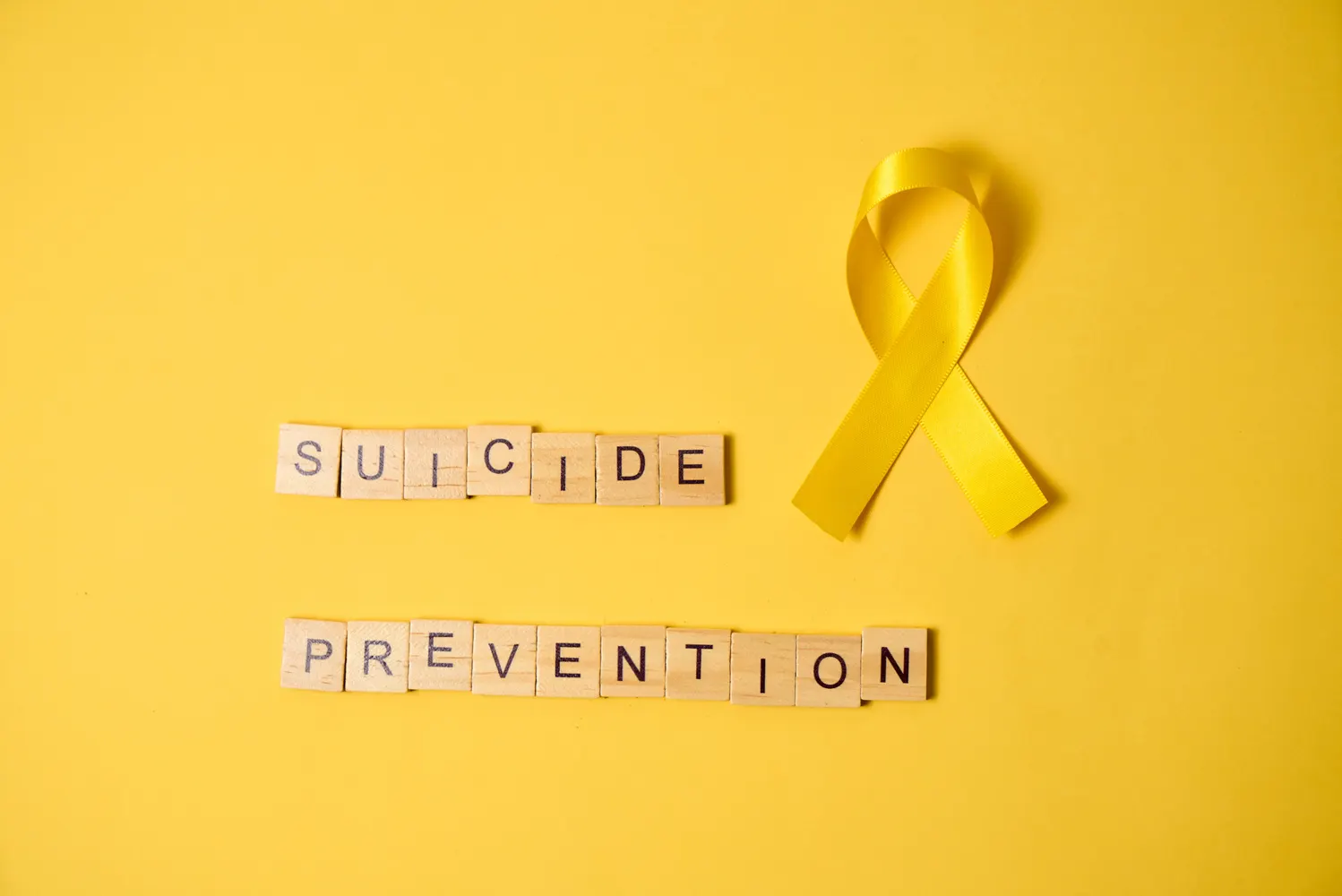
The Saturday before Thanksgiving every year is International Survivors of Suicide Loss Day — in 2026, that falls on November 21. Across the country and around the world, people who have lost someone to suicide gather in small circles to do something the rest of the world often doesn’t have language for: they say the name out loud. They say how the person died. They give each other permission to grieve.
If this is your grief, this post is for you. And if someone you love is a survivor of suicide loss, this is for you too.
A grief that comes with extra weight
In 2024, the CDC reports there were 48,824 suicide deaths in the United States (Centers for Disease Control and Prevention [CDC], 2025). But that number only tells part of the story. For every person lost to suicide, research estimates that more than 100 people are directly affected — family members, friends, coworkers, classmates, communities (Cerel et al., 2019). Each year, millions of people join a club no one wants to belong to.
And the grief that follows suicide is unlike any other.

Why suicide loss is different
Research on suicide bereavement consistently finds that survivors face a specific set of challenges that other grieving people do not (Pitman et al., 2014; Jordan, 2020):
Searing “why” questions. Survivors often experience relentless, intrusive questioning — “Why didn’t I see it? Why didn’t I ask? What if I had called that night? Was it something I said?” The absence of a clear answer can be one of the most tormenting aspects of this loss.
Guilt and self-blame. Even survivors who did everything “right” often carry crushing guilt. Guilt is so common in suicide bereavement that it is considered a defining feature, not a sign of actual responsibility (Jordan, 2020).
Stigma and silence. People often don’t know what to say, so they say nothing. Survivors frequently describe being avoided by friends, having the death whispered about rather than discussed openly, or being asked uncomfortable questions by acquaintances who feel entitled to details. The silence of others amplifies the pain.
Elevated mental health risk. Survivors of suicide loss are at significantly increased risk of depression, PTSD, and suicidal ideation themselves (Pitman et al., 2014). This is not weakness. This is grief that needs specialized, informed care.
What survivors often wish you knew
When providers who specialize in suicide loss ask survivors what they wish others understood, a few themes come up again and again:
- “I need to say their name. Please don’t be afraid of it.”
- “I need you to stay — not to fix, not to explain, just to stay.”
- “I don’t need to hear that they’re in a better place.”
- “The grief doesn’t have a timeline. Holidays, birthdays, and anniversaries will always hurt.”
- “I am not fragile. I don’t need to be protected from the truth.”
- “My grief is love with nowhere to go.”

How to support a survivor of suicide loss
Say their name. One of the kindest things you can do is speak the name of the person they lost. “I was thinking about Sarah today.” “I remembered that joke Michael used to tell.” You will not “remind them” of their grief — the grief is already there. You will remind them that their person mattered to you, too.
Ask, don’t assume. Grief after suicide is nonlinear and unpredictable. Some days they want to talk. Some days they don’t. Try, “Would it feel okay to talk about him today?” Then follow their lead.
Show up over time. The first weeks after a suicide are often full of people. The second year is often very quiet. Check in during holidays, birthdays, anniversaries, and the random Tuesdays in between.
Don’t try to explain why. Resist the urge to offer theories, assign blame, or search for clean narratives. Suicide is almost never caused by a single factor. Trying to make sense of it rarely brings peace — it usually brings more pain.
Encourage specialized support. Suicide loss support groups and clinicians who specialize in bereavement after suicide make a measurable difference (Jordan, 2020). Encourage, and if they say yes, help them find a group or provider.
If you are a survivor reading this
Your love for them did not fail. Their death was not a verdict on you.
Suicide is a death caused by illness — one of the most under-recognized, under-treated, and misunderstood illnesses there is. If you had been able to prevent it with your love alone, you would have. The fact that you couldn’t is not evidence that you didn’t try hard enough. It’s evidence that the illness was that serious.
Your grief may change shape over the years. It may never fully leave. That doesn’t mean you are broken. It means you loved someone deeply.
Please — if this grief has become something you can’t carry alone — reach out. Specialized therapy exists. Support groups exist. You are not meant to walk this road alone.
Resources
- American Foundation for Suicide Prevention (AFSP) — Survivor Day events and support resources: afsp.org/find-support/ive-lost-someone
- Alliance of Hope for Suicide Loss Survivors — online community and resources: allianceofhope.org
- 988 Suicide & Crisis Lifeline — also for survivors in crisis: call or text 988
Specialized support for survivors of suicide loss
If you have lost someone to suicide — recently or years ago — and the weight has become too heavy to carry alone, please reach out. Our team provides compassionate, trauma-informed therapy and medication management for grief, PTSD, depression, and the specific complexities of suicide bereavement.
Call our office: 813-252-0171
References
Centers for Disease Control and Prevention. (2025). Suicide data and statistics. U.S. Department of Health and Human Services. https://www.cdc.gov/suicide/facts/data.html
Cerel, J., Brown, M. M., Maple, M., Singleton, M., van de Venne, J., Moore, M., & Flaherty, C. (2019). How many people are exposed to suicide? Not six. Suicide and Life-Threatening Behavior, 49(2), 529–534. https://doi.org/10.1111/sltb.12450
Jordan, J. R. (2020). Lessons learned: Forty years of clinical work with suicide loss survivors. Frontiers in Psychology, 11, 766. https://doi.org/10.3389/fpsyg.2020.00766
Pitman, A., Osborn, D., King, M., & Erlangsen, A. (2014). Effects of suicide bereavement on mental health and suicide risk. The Lancet Psychiatry, 1(1), 86–94. https://doi.org/10.1016/S2215-0366(14)70224-X