Thanksgiving is over. Leftovers are in the fridge. The decorations are halfway between fall and winter. And somewhere — in a quiet moment this week — you may have noticed something: you are so, so tired.
Not sleepy-tired. Not had-a-long-week tired. Something deeper. The kind of tired that makes small tasks feel enormous. The kind of tired that doesn’t fully lift even when you sleep. The kind of tired that you’ve been quietly carrying for months — maybe for all of 2026.
As November closes — a month we dedicated to caregivers, to men’s mental health, to survivors of loss, to navigating complicated families — I want to name something that the calendar doesn’t officially observe but that so many of you are living with right now: the burnout nobody names. The year-end collapse of the people who’ve been holding everyone together.
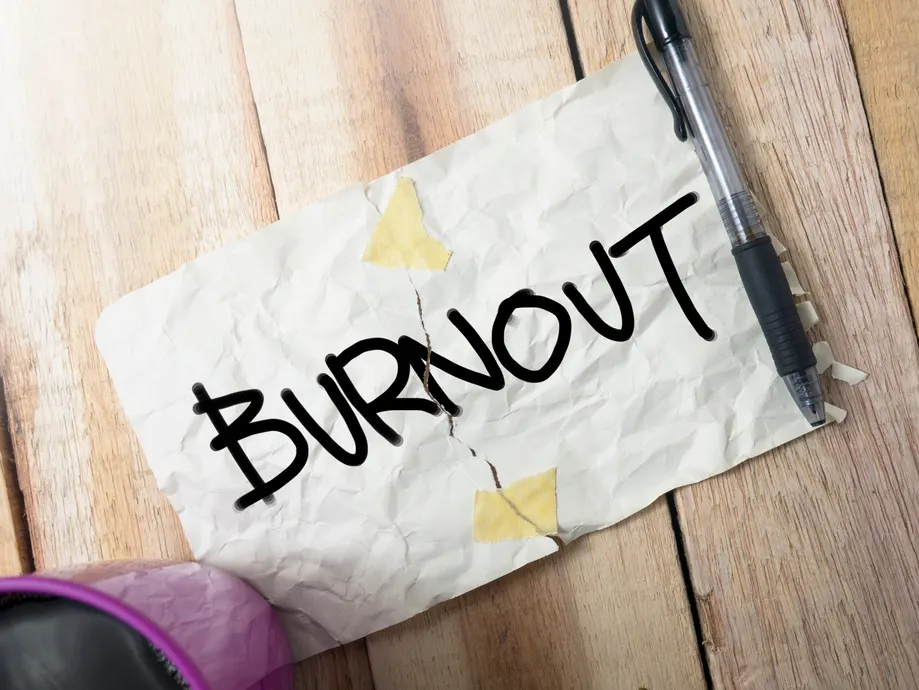
Burnout is real. And it has a science.
The modern clinical understanding of burnout comes largely from the decades-long work of psychologist Christina Maslach. In her foundational 2016 paper in World Psychiatry, Maslach and colleague Michael Leiter describe burnout as a syndrome with three core features: overwhelming emotional exhaustion, feelings of cynicism and detachment from work or responsibilities, and a reduced sense of personal accomplishment (Maslach & Leiter, 2016).
Translated into real life: you feel depleted. You feel like what you give doesn’t matter. And you feel like you’re failing — even when the evidence says you’re not.
Burnout is not a character flaw. It is the predictable response of a healthy human nervous system to sustained, chronic demand without adequate recovery.
Who this post is for
I wrote this one specifically for:
- The nurses, doctors, and psychiatric providers who have been showing up through staffing shortages, impossible schedules, and heartbreak.
- The caregivers — the sandwich generation, the spouses, the adult children — who are tending someone else’s body and rarely tending their own.
- The teachers who have been navigating a school year that asks more every semester.
- The mothers running the mental load of a household in addition to full-time work.
- The first responders carrying things they will never tell their families.
- The pastors, therapists, chaplains, and clergy who hold the grief of their communities.
- The business owners and leaders still signing paychecks for people they care about through a chaotic year.
- The “strong one” in every family — the one everybody calls when they need something.
If any of these are you — this post is for you.

How year-end burnout shows up
Burnout often disguises itself as other things. Here’s what to watch for as November ends:
- Exhaustion that sleep doesn’t fix. You wake up already tired.
- A short fuse. You’re snapping at people you love. Small inconveniences feel disproportionately overwhelming.
- Emotional numbness. Things that used to move you — joy, compassion, even grief — feel muted.
- Cynicism. You’re more irritated than usual. The people you serve are starting to feel like problems.
- Reduced sense of meaning. Work or caregiving that used to feel purposeful now feels like going through the motions.
- Physical symptoms. Headaches, GI issues, chronic muscle tension, immune system struggles.
- Difficulty concentrating. Brain fog that makes simple tasks take longer.
- Loss of self. You can barely remember who you were before you became the person everyone needs.
If you’re nodding at most of these, you are not weak. You are depleted. And depletion is not a personality trait.
Compassion fatigue: when you give care for a living
For those of you in caregiving roles — professional or family — there’s a specific subtype of burnout worth naming. Compassion fatigue is the emotional and physical exhaustion that develops when you are repeatedly exposed to the suffering of others and your own capacity to hold it empties out.
This isn’t you caring less. This is your nervous system trying to protect you by turning down the volume. If you’ve noticed yourself feeling detached, less moved by other people’s pain, or going through the motions with patients, children, or family members you genuinely love — that’s compassion fatigue speaking. It is treatable. It is not evidence that you’re in the wrong field or the wrong family. It’s evidence that you have been caring at a cost nobody has repaid you for.
Gentle permissions as November closes
If this week found you depleted, here are permissions I offer every patient who walks into my office in late November — most of whom never give them to themselves:
- You are allowed to disappoint people this December.
- You are allowed to not host anything this year.
- You are allowed to delete the group chat notifications for a while.
- You are allowed to leave work at work.
- You are allowed to take the sick day — even if you’re “only” tired.
- You are allowed to let someone else drive the holiday logistics this year.
- You are allowed to protect a full day in December that belongs to nobody but you.
- You are allowed to ask for help before you collapse.
What actually helps (beyond bubble baths)
Social media wellness tells us to “self-care.” Real recovery from burnout is less Instagrammable but much more effective. Based on research from Maslach and Leiter (2016) and on what works clinically:
1. Rest before you rest. Micro-recovery matters. A ten-minute walk between patients. Five minutes in the car before you go inside. Lying down for thirty minutes without earning it. Small, consistent recovery is more protective than one big vacation in March.
2. Reduce demand, not just add self-care. You cannot yoga your way out of carrying too much. Look hard at what can come off your plate for December. One less commitment. One task delegated. One “no” said earlier than usual.
3. Protect sleep like it’s medicine (because it is). Sleep is one of the most well-evidenced interventions for burnout recovery (Firth et al., 2020). Consistent bedtime, consistent wake time, no screens in bed, no emails after dinner.

4. Treat yourself the way you’d treat a depleted friend. Dr. Kristin Neff’s research on self-compassion consistently shows that people who treat themselves with warmth and understanding are more resilient — not less motivated — than people who criticize themselves into exhaustion (Neff, 2023). Try one sentence out loud: “Of course I’m tired. I’ve been carrying a lot. I deserve care, too.”
5. Reconnect with meaning. Burnout erodes our sense that what we do matters. Spend a few minutes this week remembering why you started — teaching, nursing, parenting, running a business, leading a ministry. Reconnecting with meaning is a documented protective factor against burnout (Maslach & Leiter, 2016).
6. Get professional support — especially if you are one. Therapists need therapists. Nurses need nurses. Caregivers need someone to care for them. Seeing a mental health provider is not an admission of weakness. It is an acknowledgment that you are a human with a mind that needs tending — just like everybody else’s.
A note about Giving Tuesday — and giving to yourself
The Tuesday after Thanksgiving — December 1 this year — is Giving Tuesday, a day dedicated to charitable giving at the start of the holiday season. If giving to causes you care about is part of how you move through the world, keep doing it.
But I want to invite you to add one more recipient to your list this year: you.
Give yourself the gift of a therapy intake call. A full night of sleep. A “no” to an obligation you don’t want. A walk without a podcast. An appointment with a provider who will actually take care of you for once. Giving to yourself is not selfish. It is the foundation that lets you keep giving to everyone else.

A bridge into December
Next week, December begins. The lights will go up. The parties will multiply. The emotional terrain will get more complicated — Seasonal Affective Disorder, holiday grief, family dynamics, year-end exhaustion that intensifies rather than softens.
You will walk into December in whatever shape November left you in. If that shape is depleted — this is your moment to pause. To shore up. To ask for help. To take something off your calendar. To call the therapist. To sleep.
You have taken care of everyone this year. This December, please — take care of you, too.
You deserve care too
If November has left you depleted and December is already feeling like a mountain — this is your invitation. We provide therapy, medication management, and compassionate psychiatric care specifically designed for the healthcare workers, caregivers, parents, leaders, and “strong ones” who carry so much of the weight of our world.
Call our office: 813-252-0171
References
Firth, J., Solmi, M., Wootton, R. E., et al. (2020). A meta-review of “lifestyle psychiatry”: The role of exercise, smoking, diet, and sleep in the prevention and treatment of mental disorders. World Psychiatry, 19(3), 360–380. https://doi.org/10.1002/wps.20773
Maslach, C., & Leiter, M. P. (2016). Understanding the burnout experience: Recent research and its implications for psychiatry. World Psychiatry, 15(2), 103–111. https://doi.org/10.1002/wps.20311
Neff, K. D. (2023). Self-compassion: Theory, method, research, and intervention. Annual Review of Psychology, 74, 193–218. https://doi.org/10.1146/annurev-psych-032420-031047