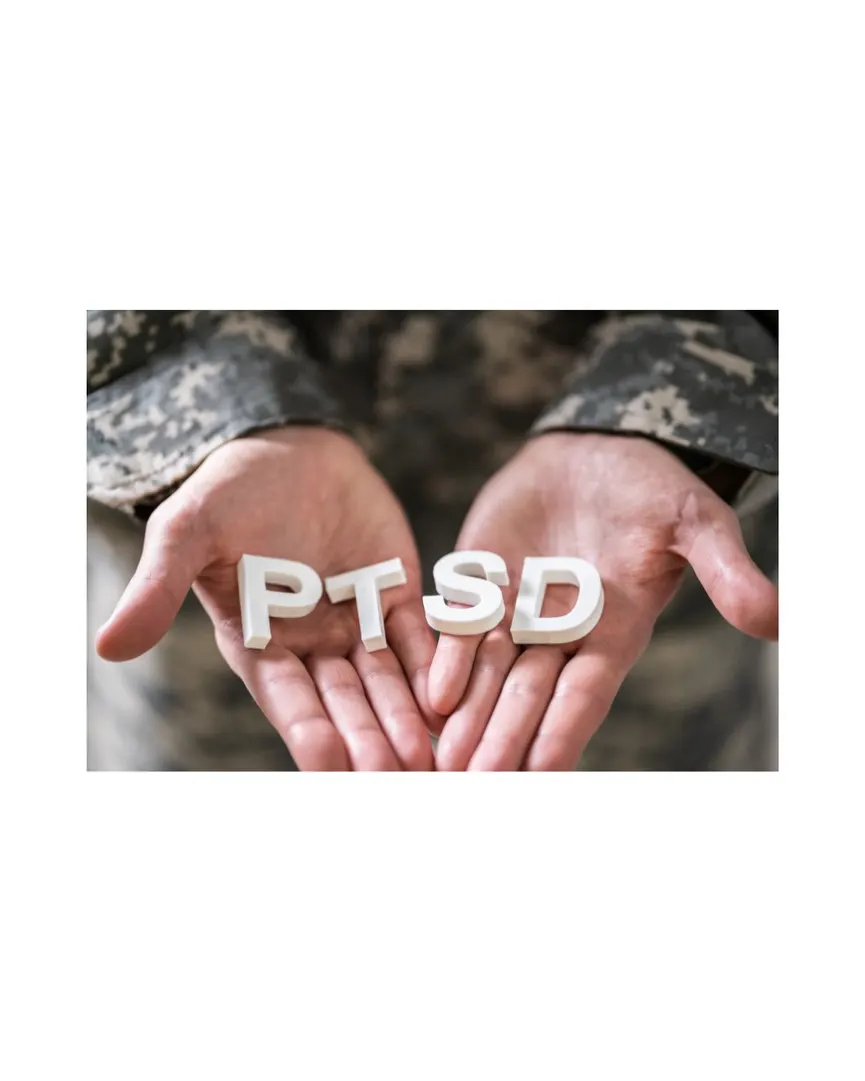
Each June, PTSD Awareness Month invites us to look more closely at one of the most misunderstood conditions in mental health. For many people, the term PTSD still calls to mind combat veterans returning from war. While the diagnosis was indeed first formalized in the wake of military trauma, the truth is far broader.
Post-Traumatic Stress Disorder can develop in anyone who has experienced or witnessed an event that overwhelmed their ability to cope. Trauma is not defined by what happened — it is defined by how the nervous system responded to what happened.

What PTSD Actually Is
According to the American Psychiatric Association (2022), PTSD is a psychiatric condition that may develop after exposure to an actual or threatened death, serious injury, or sexual violence. Symptoms generally fall into four categories:
- Intrusive memories, flashbacks, or nightmares
- Avoidance of reminders of the trauma
- Negative changes in mood, beliefs, or sense of self
- Heightened arousal — hypervigilance, irritability, difficulty sleeping or concentrating
PTSD is not weakness, oversensitivity, or an inability to "move on." It is a neurobiological response to overwhelming stress — and it is treatable.
Trauma Wears Many Faces
Research consistently shows that PTSD affects far more of the general population than most people realize. Studies estimate that roughly 6% of U.S. adults will experience PTSD at some point in their lives, with women affected at nearly twice the rate of men (National Institute of Mental Health [NIMH], 2024).
Trauma can stem from many experiences, including:
- Childhood abuse or neglect
- Sexual assault or intimate partner violence
- Serious accidents or medical emergencies
- Sudden loss of a loved one
- Natural disasters
- Community violence
- Birth trauma
- Chronic exposure to high-stress environments (first responders, healthcare workers, caregivers)

When PTSD Hides in Plain Sight
Many people living with PTSD don't recognize it in themselves. Symptoms can quietly shape daily life in ways that are easy to mislabel as personality, stress, or simply "how I've always been." Common but under-recognized signs include:
- Difficulty trusting others
- Feeling emotionally numb or disconnected
- Persistent anxiety or hypervigilance
- Trouble sleeping or recurring nightmares
- Avoiding certain people, places, or conversations
- Strong startle responses
- Chronic guilt, shame, or self-blame
Untreated PTSD is also strongly linked to depression, substance use, chronic pain, and increased risk of cardiovascular disease (Kessler et al., 2017).

Healing Is Possible
PTSD is one of the most studied — and most treatable — mental health conditions. Evidence-based treatments include:
- Trauma-focused cognitive behavioral therapy (TF-CBT)
- Eye Movement Desensitization and Reprocessing (EMDR)
- Prolonged Exposure (PE) therapy
- Cognitive Processing Therapy (CPT)
- Medication management, when clinically appropriate
- Somatic and mindfulness-based approaches that help regulate the nervous system
The goal of treatment is not to erase what happened. It is to help the nervous system finish processing what it never had the chance to.
A Message for This June
If you have ever wondered whether what you experienced "counts" as trauma — it does. If you have spent years coping, avoiding, or pushing through — there is another way. Healing does not require reliving every painful detail. It requires the right support, the right tools, and the willingness to begin.
At Prestige Health & Wellness, we provide compassionate, trauma-informed care across Tampa, Lakeland, and Bloomingdale. You are not alone, and you are not beyond help.
📞 Tampa: 813-252-0171 | Lakeland: 863-250-0240
🌐 Book online at https://yourprestigehealth.com
References
American Psychiatric Association. (2022). Diagnostic and statistical manual of mental disorders (5th ed., text rev.).
Kessler, R. C., Aguilar-Gaxiola, S., Alonso, J., et al. (2017). Trauma and PTSD in the WHO World Mental Health Surveys. European Journal of Psychotraumatology, 8(sup5), 1353383.
National Institute of Mental Health. (2024). Post-traumatic stress disorder (PTSD). U.S. Department of Health and Human Services.