Suicide Prevention Month has asked a lot of us. We’ve talked about resetting our routines, recognizing the hidden signs of depression, and having the hardest conversations of our lives. As September ends, this week’s post is a gentler one — about a coping tool that has quietly become part of many people’s mental health toolkit, often without them realizing it’s backed by real neuroscience.
What is ASMR?
ASMR stands for Autonomous Sensory Meridian Response — the pleasant, tingling sensation many people experience in response to specific soft sounds and gentle visual stimuli. Common triggers include whispering, soft speaking, tapping, brushing, page-turning, personal attention, and slow, deliberate movement.
Some people feel a distinct tingle across the scalp and neck. Others feel simple, deep relaxation without any physical sensation at all. Both count. Both work.
What the research actually says
- It measurably calms the body. Poerio and colleagues (2018) found that people watching ASMR videos showed significant reductions in heart rate — comparable to music-based relaxation and mindfulness — along with increased calm and positive affect.
- It affects brain activity linked to relaxation. Neuroimaging studies show ASMR content activates regions associated with reward, emotional regulation, and social bonding, with EEG changes consistent with reduced arousal (Sakurai et al., 2023).
- Personal preference matters. Content that matches your own preferences produces stronger relaxation than generic ASMR — your favorite kind is the best kind (Higashi et al., 2023).
- It works for many, but not everyone. Between 20–70% of people report some ASMR response, and even those who don’t feel the tingle often report reduced stress (Poerio et al., 2018).
What ASMR may help with
Anxiety and overstimulation. Soft, repetitive sounds paired with slow, intentional speech can help slow the breath and reduce hyperarousal.
Sleep and winding down. Adding ASMR to a nightly routine — dim lights, phone on Do Not Disturb, headphones — can support faster sleep onset.
Grounding and sensory regulation. For people who experience sensory sensitivity or dissociation, gentle audio input can be a low-pressure way to reconnect with the present moment.
A sense of comforting presence. Roleplay-style ASMR can simulate the experience of being cared for. It isn’t a replacement for real relationships, but it can help fill quiet moments and reduce isolation.
How to try ASMR as a coping skill
1. Choose your triggers. Experiment with what soothes you: whispering or soft speaking; tapping, scratching, or brushing sounds; rainfall, ocean, or nature sounds; roleplay; slow, mindful hand movements. YouTube, Spotify, and dedicated ASMR apps are common starting points.
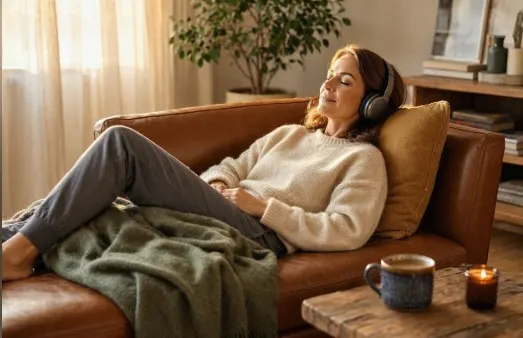
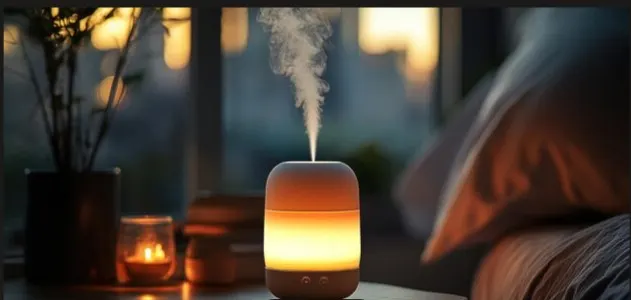
2. Set the environment. Headphones deepen the effect significantly. Find a quiet, comfortable space. Dim the lights. Don’t multitask — this is your time to unplug.
3. Be intentional. Before you press play, tell yourself: “I’m using this moment to regulate my nervous system.” Setting an intention deepens the therapeutic effect.
4. Make it a routine. Try building ASMR into your day — before sleep, during a stressful workday, or after emotionally difficult moments. Consistency is where coping skills gain their power.
5. Notice what doesn’t work. If a trigger feels irritating instead of soothing, move on. Not every tool fits every person.
When ASMR isn’t enough
ASMR is a wonderful tool — but it is a tool, not a treatment. Please reach out for professional support if you are experiencing:
- Persistent depression, anxiety, or hopelessness
- Thoughts of suicide or self-harm
- Trouble functioning at work, in relationships, or in daily life
- Sleep disturbance that doesn’t respond to coping strategies
- Symptoms that have lasted more than two weeks
Closing the month well
September has asked us to look at hard things. To notice. To ask. To reach out. But sustainable mental health also asks us to build a life we don’t need to constantly recover from — to weave in the small, quiet practices that regulate our bodies and minds day after day.
ASMR is one of those small practices. So is a walk. So is a phone call. So is a therapist’s number saved in your contacts before you need it. Sometimes the most powerful mental health tools are the softest ones.
Build your care team this fall
Coping skills matter — and so does having a professional in your corner. We offer psychiatric evaluation, therapy, medication management, ADHD testing, and whole-person care in a warm, judgment-free environment.
Tampa: 813-252-0171 | Lakeland: 863-250-0240
References
Higashi, R., Nakayama, K., & Sakurai, T. (2023). Frontiers in Human Neuroscience, 17, 1249176.
Poerio, G. L., Blakey, E., Hostler, T. J., & Veltri, T. (2018). PLOS ONE, 13(6), e0196645.
Sakurai, N., et al. (2023). Frontiers in Neuroscience, 17, 1025745.